


Aloha friends,
We have seen a truly interesting week. NASA performed the longest journey in human history, yet this was almost ignored as all eyes remained fixated on the conflict in Iran. The “good” news: a two-week ceasefire has been achieved. However, the first day of negotiations did not end well.
This week, I want to look at how sustainable the current Bitcoin run-up really is. What impact did the war actually have, and how does Bitcoin’s performance compare to the stock market? Let’s dive in.
Disclaimer: Views expressed are the author’s personal views and should not be relied upon as investment advice.
The War Impact: BTC vs. TradFi
Since February 28th, the world has been watching the escalation in Iran. Let’s look at the market movement since that date.
Bitcoin has moved up roughly 12% from its February 28th low. On the news of the ceasefire, it spiked initially but then retraced, leaving us with zero change.
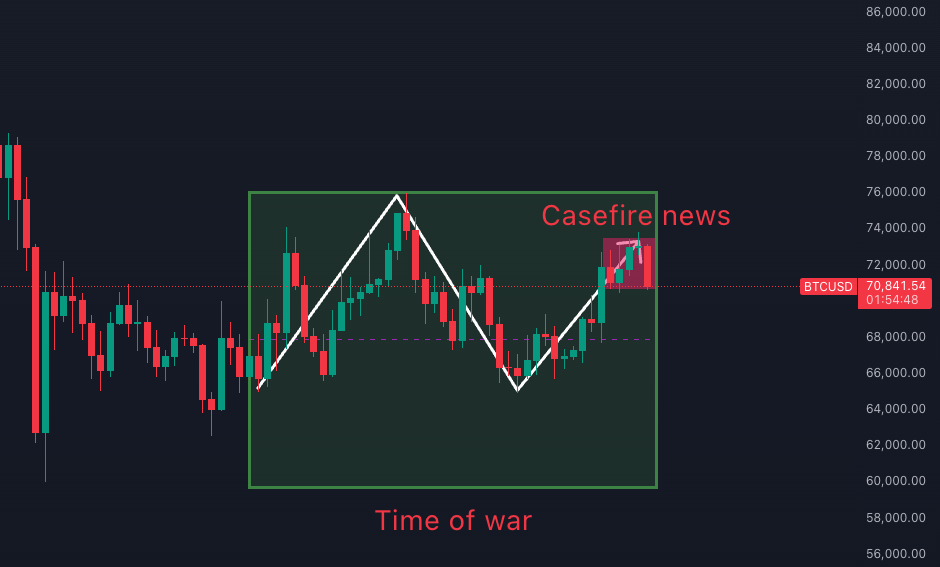
In comparison, the Nasdaq saw a 3% increase (recovering 10.4% after an initial 6.8% drop). The S&P 500 has been basically flat, surging 7.9% only after the ceasefire announcement following a 7.2% drop.
What does this show us? Compared to the stock market, Bitcoin is not showing significant strength. We didn't even see a meaningful counter-rally after the ceasefire announcement. In my view, this isn't unusual. As I’ve mentioned before, we are in a bear market, and there is no substantial organic strength incoming. Even the massive purchases by Michael Saylor aren't enough to shift the macro trend.
We are seeing news-driven moves that are typically unsustainable and often retraced within days (see e.g. a research by CryptoDaily).
Furthermore, the economic impact of this conflict will likely hit in the coming weeks. It’s about more than just oil prices; we’re talking about fertilizers and helium (essential for chip production). I expect oil prices to stay higher for longer, which will continue to weigh on the global economy and, by extension, crypto prices.
The Liquidity Debate: GLI vs. M2
Liquidity was already rolling over before the conflict began, but the war is now acting as an accelerant. Global liquidity has declined for four straight weeks. The rising Dollar, bond market volatility, and declining Fed liquidity are driving this move per the Global Liquidity Index (GLI).
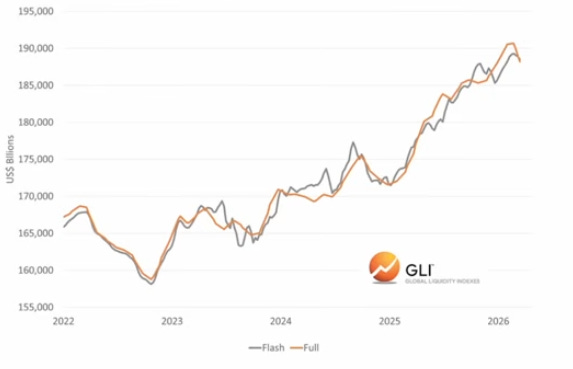
In my previous report, Does Bitcoin really lag Global Liquidity?, I noted that BTC typically tops before global liquidity, with the two diverging early in bear markets: Exactly what we are seeing now. BTC then bottoms once the liquidity cycle hits its floor, a process that took about a year in previous cycles. We are currently about half a year into that process.
A Note on the "Pal vs. Howell" Perspectives
Per GLI data, the liquidity cycle has topped and is in a structural decline. I know Raoul Pal (Global Macro Investor) constantly suggests that liquidity is still rising. Here are two things to consider:
The Data Depth: Raoul focuses on simple, public aggregates like M2 Money Supply. GLI is a much broader proprietary measure that tracks the flow of cash and credit and, crucially, the momentum/growth rate rather than just absolute levels. It essentially starts where M2 ends.
The Reality Check: Raoul is still calling for a Bitcoin cycle top in Q2 2026. That would require a surge of 80–100% within the next 2.5 months. I’ll leave that scenario to your imagination, but I cannot see it being anywhere close to reality.
Why is liquidity declining?
Global Tightening: Japan is considering more rate hikes (after 150 bps since July ‘24). The EU expects 2–3 hikes, and the UK anticipates two. The Fed has zero rate cuts priced for this year. China is the only outlier currently easing.
Oil: Higher energy costs are tightening financial conditions and borrowing rates.
Fiscal: Tax refunds are being offset by the rising cost of living and energy.
In my perspective, the market did not yet broadly price in the full risks related to the conflict and its mid term causes. Once we see this, I expect a further drag on liquidity via rising bond market volatility and a rising dollar.
For me, the posts on X from Trump, are nothing more as noise in the global theatre and we will on a long not even realize in the chart pattern that anything happened. The market was already before the war in a bear market (for Bitcoin) and beyond the topping for the stocks.
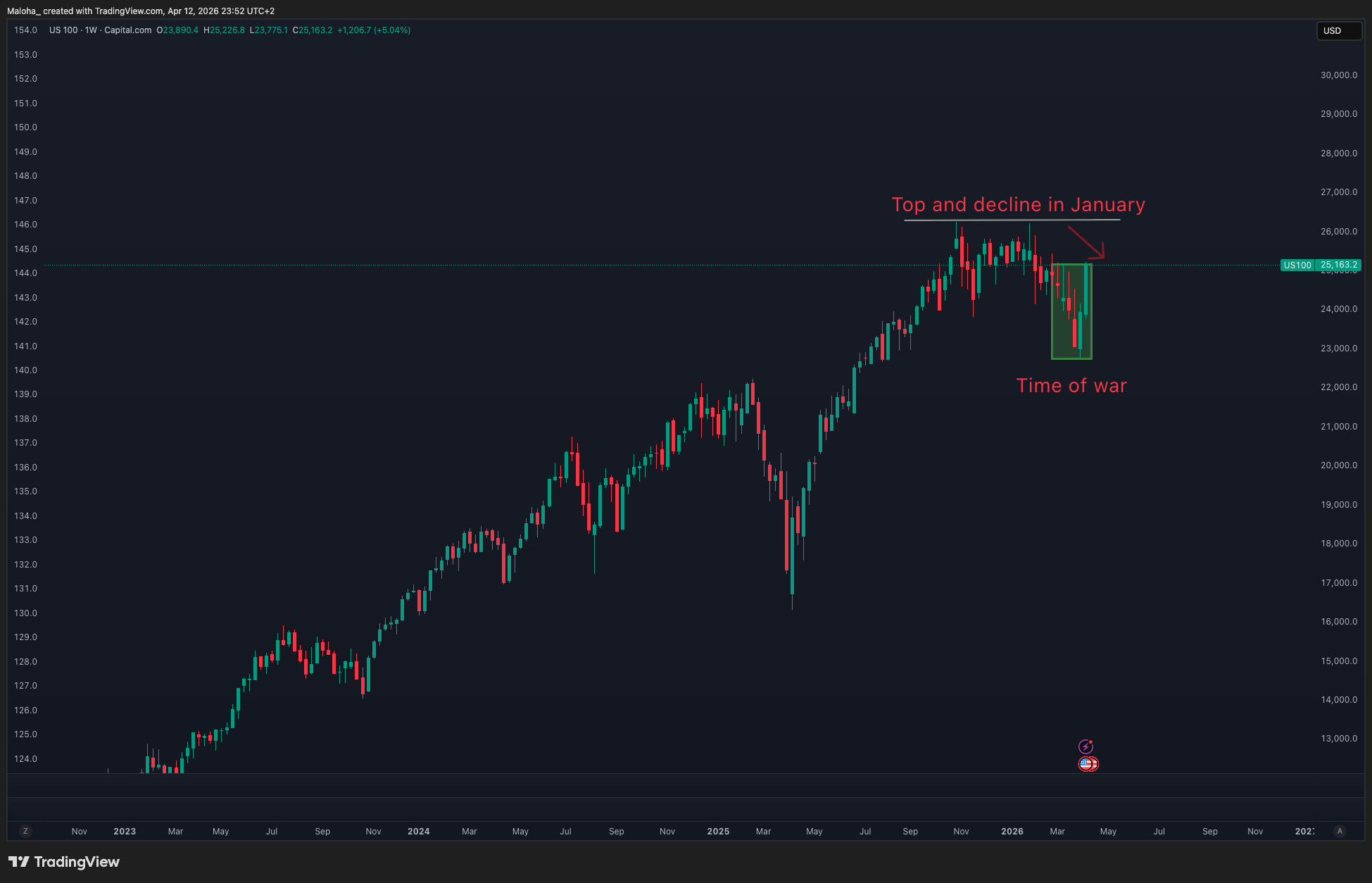
Hence, it is still in a reasonable scenario to hit ATHs for the stock market on a short notice, as we are not far from it. However, I do not expect it to grow mid term and due to all the side effects of the war, see a decline over the next months.
Final Thoughts
The overall cycle turned long before the conflict. The war is simply lasting longer than expected, creating unclear outcomes that further tighten liquidity. The Fed is currently unable to ease unless a major systemic break occurs, which would lead to a downturn first anyway.
Bitcoin’s structure remains firmly in a bear market. As long as we stay below $80k without a daily candle close above it, the thesis doesn’t change. The Realized Price is slowly moving downward, currently sitting at $54,200. Historically, we have always dipped below this level before a true bottom is formed. That remains my base case for the coming months.
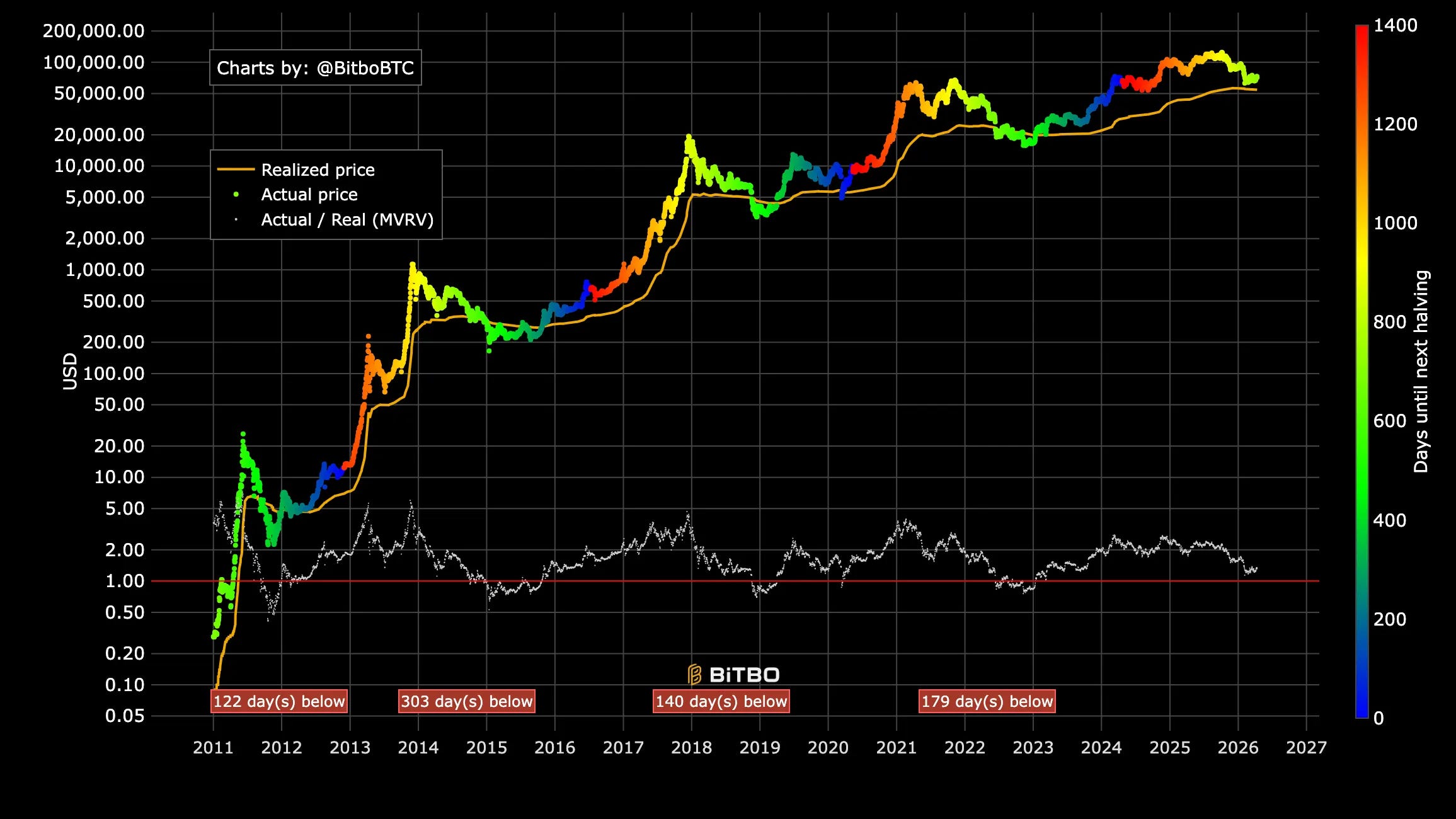
Short term, noise from X and Truth Social will cause volatility, but the overall picture stays the same: the bottom is not in. Bear markets are exhausting, but now is the time to calm the anxiety and sit on your hands.
Portfolio Management
No changes this week. My shorts are still in place. I took a small counter-rally trade for myself, but as I’m not a day-trading content creator, I’m keeping the focus here on the macro strategy.
That’s it for today - I hope I could deliver some valuable insights.
Maloha
Stay Humble. Stay Curious. Enjoy the Journey.
Disclaimer: Views expressed are the author’s personal views and should not be relied upon as investment advice.